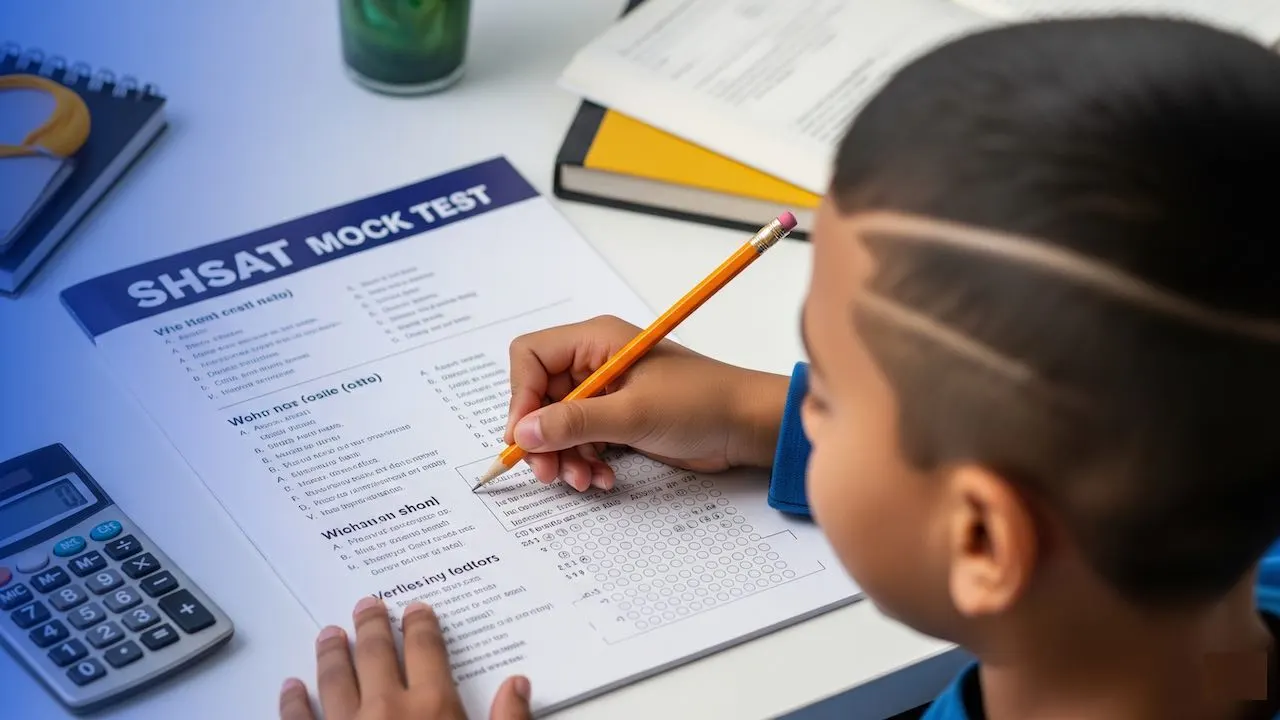
यह SHSAT Mock Test एक free, full-length Specialized High Schools Admissions Test practice test है जो NYC Department of Education के official exam pattern पर बना है। यह Specialized High Schools Admissions Test practice resource सभी students के लिए free है जो NYC specialized high schools admission चाहते हैं। 57 ELA और 57 Math प्रश्न, कुल 114 questions 180 minutes में। Submit करते ही instant score और Stuyvesant, Bronx Science, Brooklyn Tech सहित सभी 8 NYC specialized schools के लिए। Stuyvesant mock test, Bronx Science practice test और Brooklyn Tech admission test सभी यहाँ एक ही platform पर available हैं। school by school admission estimate मिलता है। गलत उत्तर पर कोई penalty नहीं, इसलिए सभी 114 प्रश्न attempt करें।
SHSAT ELA and Math practice test free यहाँ available है। जो students SHSAT mock test Stuyvesant cutoff practice करते हैं वे consistently first attempt SHSAT success पाते हैं।
हर साल लगभग 26,000 students यह NYC specialized high school entrance exam practice की ज़रूरत के साथ SHSAT देते हैं। सिर्फ 15.9% students को seat मिलती है। जो students 5 से 10 full-length SHSAT mock tests attempt करते हैं वे पहले attempt में ही top NYC high school में seat पाते हैं। अपने dream school NYC के लिए आज से practice शुरू करें।
SHSAT क्या है: Specialized High Schools Admissions Test की पूरी जानकारी
एसएचसैट (Specialized High Schools Admissions Test) NYC के 8 Specialized High Schools में admission का एकमात्र criteria है। यह SHSAT eligibility criteria हर 8th और 9th grade student के लिए जानना ज़रूरी है जो specialized school admission dream रखते हैं।
- कौन दे सकता है: NYC के 8th और 9th grade students जो NYC public, private या parochial school में पढ़ते हैं।
- SHSAT mock test for 8th grade students: 8th graders दो बार attempt कर सकते हैं, 8th में एक बार और 9th में एक बार।
- SHSAT mock test for 9th grade students: 9th graders सिर्फ एक बार attempt कर सकते हैं और available seats बहुत कम होती हैं।
- परीक्षा की तारीख: हर साल October से November के बीच।
SHSAT, ISEE या SSAT से अलग है। SHSAT vs ISEE और SHSAT vs SSAT में सबसे बड़ा अंतर यह है कि SHSAT सिर्फ NYC Specialized High Schools के लिए है और इसका syllabus NYC DOE द्वारा तय होता है।
SHSAT Mock Test Format: 114 Questions 180 Minutes का Exam Structure
एसएचसैट mock test 114 questions 180 minutes में complete करना होता है। यह table इस SHSAT free mock test और असली exam दोनों पर लागू होती है।
| Parameter | विवरण |
|---|---|
| Conducting Body | NYC DOE, Pearson Assessments |
| Section 1: SHSAT ELA Mock Test | 57 ELA questions (47 scored + 10 field test) |
| Section 2: SHSAT Math Mock Test | 57 Math questions (47 scored + 10 field test) |
| कुल Questions | 57 ELA 57 Math = 114 total |
| कुल समय | 180 minutes (3 घंटे) |
| प्रति प्रश्न औसत समय | 1 minute 35 seconds per question |
| Calculator | No calculator permitted |
| Penalty for wrong answer | No penalty for wrong answer |
| Composite score range | Composite score 200 to 800 |
| Scaled score per section | Scaled score per section: 100 से 400 |
| Format (Fall 2025 से) | Computer-Based Test |
| Format (Fall 2026 से) | Computer Adaptive Test (CAT) |
SHSAT Computer Adaptive Test Mock Test: Fall 2026 से क्या बदला
SHSAT computer adaptive test mock test practice करना आज सबसे ज़रूरी है क्योंकि Fall 2026 से असली exam Computer Adaptive Test (CAT) format में होगा। इस computer adaptive test format में difficulty real time में personalize होती है। SHSAT adaptive test practice online free यहाँ उपलब्ध है।
| Feature | पहले का Digital SHSAT | Computer Adaptive SHSAT (CAT) |
|---|---|---|
| प्रश्नों का क्रम | सभी के लिए एक जैसा | हर उत्तर के बाद बदलता है |
| पुराने उत्तर review | Section में allowed | Submit के बाद नहीं |
| Skip और वापस आना | Allowed | Allowed नहीं |
| Difficulty | सबके लिए समान | Real time personalized |
| Early accuracy | Equal weight | पहले प्रश्न सबसे ज़्यादा matter करते हैं |
Linear practice test SHSAT syllabus topics की knowledge build करता है। लेकिन SHSAT computer adaptive test practice real exam की pacing और decision habits train करती है। Competitive advantage पाने के लिए दोनों ज़रूरी हैं।
SHSAT No Negative Marking Practice: हर प्रश्न attempt करें
एसएचसैट no negative marking practice की सबसे बड़ी strategic value यह है कि आप बिना किसी डर के guess कर सकते हैं। No penalty for wrong answer का मतलब है कि blank question guaranteed zero है।
| स्थिति | Strategy | कारण |
|---|---|---|
| उत्तर निश्चित जानते हैं | तुरंत answer करें | Guaranteed mark |
| 2 options eliminate हो सकते हैं | Best guess करें | 50% chance, कोई penalty नहीं |
| बिल्कुल नहीं जानते | फिर भी guess करें | 25% chance, zero penalty |
| Time कम बचा है | सभी remaining questions में एक option mark करें | Random marking से भी कुछ marks मिल सकते हैं |
Stronger section first complete करने की strategy mock test में practise करें। जिसमें score बेहतर हो उसे पहले complete करें, फिर बाकी समय में दूसरा section करें।
SHSAT Cutoff Score Prediction Mock Test: School-wise Target
SHSAT cutoff score prediction mock test से आप जान सकते हैं कि आप किस school के eligible हैं। नीचे SHSAT mock test scoring 200 to 800 के range में 2025-2026 official NYC DOE data पर आधारित cutoffs हैं।
| NYC Specialized High School | Cutoff Score 2025-2026 | Mock Test Target | Focus Area |
|---|---|---|---|
| Stuyvesant High School | 561 | 590+ | STEM और Research |
| HSMSE at City College | 539 | 570+ | Math, Science, Engineering |
| Queens High School for Sciences | 531 | 560+ | Science Research |
| Bronx High School of Science | 525 | 555+ | Science और Math |
| Staten Island Technical High School | 517 | 545+ | STEM Programs |
| High School of American Studies | 507 | 535+ | Humanities |
| Brooklyn Technical High School | 506 | 535+ | Engineering और Technology |
| Brooklyn Latin School | 495 | 520+ | Humanities, IB Program |
Score above Stuyvesant cutoff रखने के लिए mock test में consistently 590+ target रखें। SHSAT mock test Stuyvesant cutoff practice से यह score level build होता है। Stuyvesant High School admission score, Bronx High School of Science cutoff और Brooklyn Technical High School cutoff सभी हर साल बदलते हैं। इसलिए 30 से 60 points ऊपर का buffer हमेशा रखें।
SHSAT mock test Brooklyn Tech Bronx Science के लिए score target 535 से 555 के बीच रखना सबसे safe strategy है।
SHSAT ELA Mock Test: SHSAT Syllabus Topics और Practice
एसएचसैट ELA और Math practice test free यहाँ उपलब्ध है। ELA section में SHSAT revising and editing practice और SHSAT reading comprehension practice दोनों शामिल हैं।
Revising and Editing Questions
- Grammar errors fix करना, standalone sentences में
- Sentence structure और clarity improve करना
- Short draft paragraphs में punctuation correct करना
- Word choice और tone appropriateness
Reading Comprehension Passages
- Reading comprehension passages की length 400 to 800 word passages होती है
- Fiction, nonfiction, science articles, historical narratives, persuasive essays
- Main idea, central theme, author purpose identify करना
- Textual evidence से answers support करना
- Vocabulary in context, inference, conclusion
Technology Enhanced Items (TEI) ELA में
- Drag and drop sorting: sentences या ideas को correct order में arrange करना
- Dropdown selections एक passage के अंदर
- Multiselect answer choices: सभी सही options चुनने होते हैं। Partial credit not given, एक भी part miss होने पर zero score।
SHSAT Math Mock Test: SHSAT Algebra Geometry Practice
SHSAT algebra geometry practice के लिए Math section में calculator allowed नहीं है। Word problems 2-3 skills एक साथ test करते हैं।
Number Operations और Algebra
- Integers, fractions, decimals, percentages
- Ratio, proportion
- Algebraic expressions और linear equations
- Inequalities, functions, patterns
Geometry
- Angles, triangles, quadrilaterals, circles
- Area, perimeter, volume
- Coordinate geometry, Pythagorean theorem
Statistics और Data Analysis
- Mean, median, mode, range
- Probability
- Bar graphs, pie charts, line graphs interpret करना
Technology Enhanced Items (Math में)
- Grid-in questions: numerical answer type करना होता है
- Multiselect answer choices: एक से अधिक answers सही हो सकते हैं। Partial credit not given।
- Technology Enhanced Items (TEI) को skip मत करें। इनका weight regular MCQ जितना ही है।
SHSAT Scoring System: Score कैसे Calculate होता है
एसएचसैट scoring system तीन steps में काम करता है। Auto scoring से instant result मिलता है।
- Raw Score: प्रत्येक section में सही उत्तरों की गिनती। 47 scored questions प्रति section।
- Scaled score per section: Raw score को statistical process से 100-400 के बीच convert किया जाता है। Test difficulty के हिसाब से adjustment होता है।
- Composite score 200 to 800: ELA scaled score + Math scaled score = Final Composite Score। यही score school admission determine करता है।
School by school admission estimate composite score को हर school के latest cutoff से compare करके calculate होता है। Mock test submit करते ही यह estimate मिलता है।
SHSAT Test Prep: Study Plan और SHSAT Preparation Tips
SHSAT test prep के लिए यह structured plan how to pass SHSAT in first attempt का सबसे proven तरीका है। SHSAT exam prep तीन phases में होती है।
1 Phase: Baseline Diagnostic Test
- Baseline diagnostic test यानी SHSAT diagnostic test सबसे पहले दें। 180-minute strict timer के साथ पूरा exam attempt करें। यह test ELA और Math दोनों में exact weak spots दिखाता है।
2 Phase: SHSAT Sample Questions और Targeted Practice
- Weak topics पर SHSAT sample questions से chapter-level practice करें।
- हर 3-4 हफ्ते में एक SHSAT full length mock test 180 minutes attempt करें।
- SHSAT practice test with answer key से हर गलत उत्तर का explanation पढ़ें। Answer key explanation समझना score improvement का सबसे fast तरीका है।
3 Phase: Weekly Simulation Tests
- अंतिम 4-6 हफ्तों में weekly simulation tests दें। CAT format की pacing build होती है।
- SHSAT timed practice में strongest section पहले complete करने की habit बनाएँ।
- 5 to 10 mock tests complete करने वाले students consistently बेहतर perform करते हैं।
| Phase | Timing | Target |
|---|---|---|
| Baseline diagnostic test | Preparation शुरू होने से पहले | Weak spots identify करें |
| SHSAT sample questions + targeted practice | हर 3-4 हफ्ते में 1 full test | Score improve करते रहें |
| Weekly simulation tests | अंतिम 4-6 हफ्ते | Cutoff से 30-60 points ऊपर consistent score |
SHSAT Official Practice Test और Study Material कहाँ मिलेगा
एसएचसैट official practice test NYC DOE सबसे reliable resource है। NYC DOE Form A और Form B दोनों Technology Enhanced Items के साथ available हैं।
- SHSAT study guide: NYC DOE की official website (schools.nyc.gov) पर free download available है। इसमें SHSAT sample questions और official answer explanations दोनों हैं।
- SHSAT study material: इस page पर available SHSAT preparation test और SHSAT practice test with instant score NYC DOE pattern पर based है। Auto scoring से same day feedback मिलता है।
- SHSAT tutoring online: यदि किसी specific section में score consistently low आ रहा है तो online tutoring targeted help देती है। Mock test results दिखाएँ ताकि tutor exact weak areas जान सके।
SHSAT Test Date Registration: कब और कैसे Apply करें
SHSAT test date registration miss करना मतलब उस cycle में exam नहीं दे सकते। Registration हर साल September में खुलती है।
| Event | अनुमानित Timing |
|---|---|
| Registration शुरू | September (हर साल) |
| Registration की अंतिम तारीख | October की शुरुआत |
| SHSAT परीक्षा | October से November |
| Score release | March (हर साल) |
| Admission offers | March में score के साथ |
- School के guidance counselor से registration के बारे में बात करें।
- myschools.nyc पर Specialized High Schools application submit करें।
- School preference list carefully भरें। सभी 8 schools rank कर सकते हैं।
- Admit card school के through मिलता है।
Discovery Program NYC Specialized Schools: Cutoff से नीचे रहने पर
Discovery Program NYC specialized schools का official alternate admission pathway है उन students के लिए जो cutoff से थोड़ा नीचे रहते हैं।
- Eligible: Economically disadvantaged students जो cutoff से थोड़ा नीचे score करते हों।
- Process: Summer में specialized high school में pre-admission academic program complete करना होता है। Program successfully complete करने पर admission मिलता है।
- Seats: NYC Law के अनुसार minimum 10% seats Discovery Program से भरी जानी चाहिए।
SHSAT Mock Test for 8th Grade vs 9th Grade Students
SHSAT mock test for 8th grade students और SHSAT mock test for 9th grade students दोनों के लिए same exam है, लेकिन available seats में बड़ा अंतर है।
| आधार | 8th Grade SHSAT | 9th Grade SHSAT |
|---|---|---|
| Admission year | 9th grade (Freshman year) | 10th grade |
| Available Seats | अधिकतर seats यहाँ | बहुत कम, sirf खाली seats |
| Cutoff Score | Standard | आमतौर पर अधिक ऊँचा |
| Attempts | 2 बार (8th + 9th grade) | सिर्फ 1 बार |
8th grade dream school के लिए 7th grade के अंत से ही SHSAT exam prep शुरू करना सबसे effective strategy है। Improve SHSAT score fast करने के लिए weekly mock tests और answer key review सबसे proven method है।
SHSAT Mock Test Preparation Tips: Common Mistakes से बचें
SHSAT preparation tips में सबसे पहला है इन common mistakes से बचना। यह mistakes beat the competition की जगह NYC top high school seat से दूर कर देती हैं।
- Adaptive test की जगह सिर्फ linear sets: जो students सिर्फ fixed difficulty questions practice करते हैं वे real CAT exam में freeze हो जाते हैं। SHSAT computer adaptive test practice ज़रूरी है।
- Mock test के बाद review skip: SHSAT online practice test का असली फायदा answer key explanation पढ़ने में है, सिर्फ score देखने में नहीं।
- एक प्रश्न पर 2 minute से अधिक: CAT format में submit के बाद वापस नहीं जा सकते। Best guess submit करके आगे बढ़ें।
- सिर्फ sections practice, full exam नहीं: SHSAT full length practice test की stamina बिना full exam दिए नहीं बनती।
- Technology Enhanced Items avoid करना: SHSAT Technology Enhanced Items practice mock test में include करें। Grid-in और multiselect items regular MCQ जितना ही weight रखते हैं।
Secure your future और अपने dream school NYC में admission पाने के लिए SHSAT exam prep आज से शुरू करें। Free SHSAT mock test NYC specialized schools यहाँ बिना किसी registration के available है। Get into Stuyvesant High School का सपना consistent practice से ही पूरा होता है।
SHSAT Mock Test: अक्सर पूछे जाने वाले प्रश्न
प्रत्येक SHSAT full length mock test में 114 questions होते हैं: 57 ELA और 57 Math। Duration 180 minutes है। इनमें 94 scored और 20 unscored field test questions होते हैं। No penalty for wrong answer इसलिए सभी attempt करें।
हाँ, यदि mock test CAT format follow करे। SHSAT practice test with instant score और auto scoring से same day feedback मिलता है। Cutoff से 30-60 points ऊपर consistent mock test score real exam readiness का सबसे reliable indicator है।
Fall 2026 के CAT format में नहीं। एक बार submit होने पर question lock हो जाता है। SHSAT computer adaptive test mock test practice से यह habit बनती है।
2025-2026 में Stuyvesant High School admission score 561 है। Mock test में 590+ target रखें। Cutoffs हर साल बदलते हैं इसलिए buffer ज़रूरी है।
5 to 10 full-length mock tests सबसे अच्छा result देते हैं। पहला baseline diagnostic test baseline देता है। Main period में हर 3-4 हफ्ते में एक test। अंतिम 4-6 हफ्तों में weekly simulation tests।