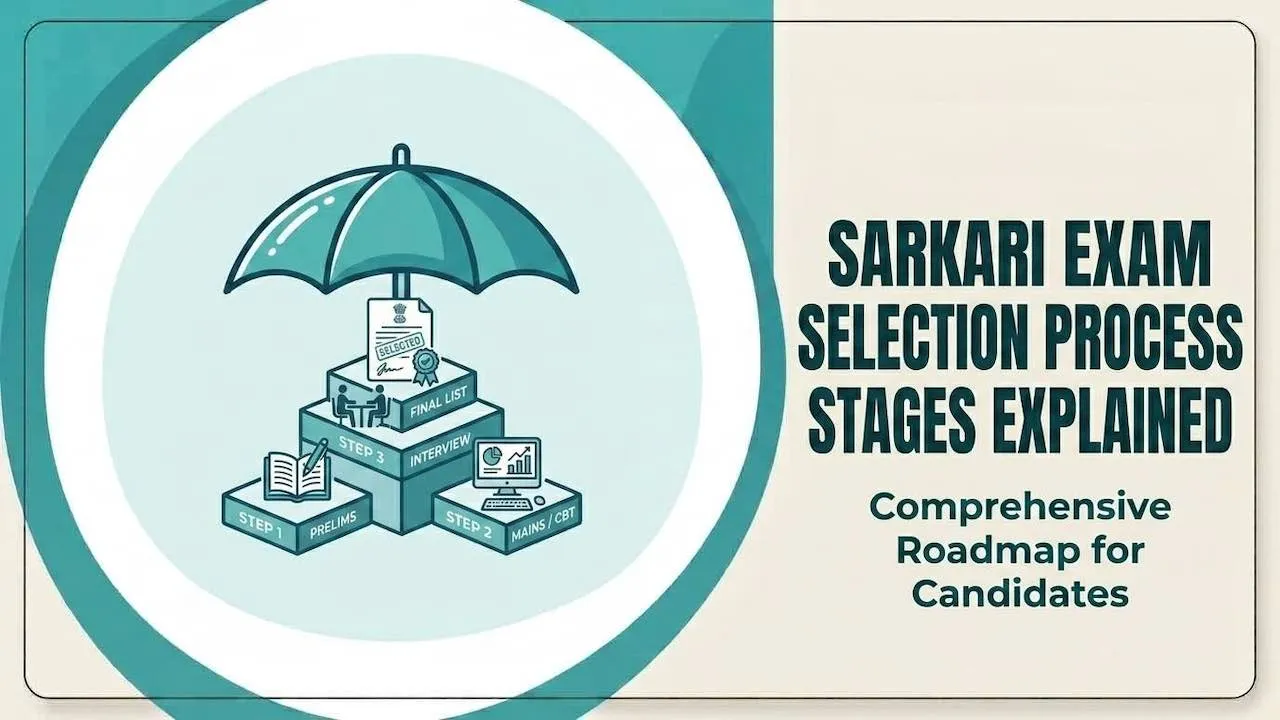
किसी भी sarkari exam में final selection notification देखने से शुरू होकर joining letter मिलने तक 8 से 12 अलग stages से गुज़रता है। हर stage independently candidates को eliminate करती है और एक stage clear करना अगली stage की guarantee नहीं देता। SarkariExam.Center पर सभी exams की notifications, admit cards, results और mock tests एक जगह मिलते हैं। नीचे हर stage की पूरी जानकारी step by step है।
Sarkari Exam Selection Process: सभी Stages एक नज़र में
हर exam type के अनुसार stages अलग होती हैं लेकिन एक common framework होता है जो लगभग सभी sarkari exams में follow होता है।
| Stage | क्या होता है | किन Exams में | Eliminates Candidates? |
|---|---|---|---|
| Stage 1: Notification और Application | Vacancy, eligibility और dates official notification में | सभी exams | Ineligible candidates |
| Stage 2: Admit Card | Roll number और exam centre की official permission | सभी exams | नहीं (informational stage) |
| Stage 3: Preliminary Exam (Prelims/Tier 1) | Screening exam, qualifying nature | UPSC, SSC, IBPS, State PSC, Railways | हाँ, 80 से 95% candidates |
| Stage 4: Mains Exam (Tier 2/Paper 2) | Detailed exam, merit में count होती है | UPSC, SSC, IBPS, State PSC | हाँ, बचे candidates में से बड़ी संख्या |
| Stage 5: Physical Test (PET/PST) | Running, height, chest measurement | Police, Defence, RPF, Forest Guard | हाँ, 20 से 40% |
| Stage 6: Skill Test / Typing Test | Typing speed, computer proficiency | SSC CHSL, Clerk, DEO posts | Qualifying, marks नहीं जुड़ते |
| Stage 7: Interview / Personality Test | Communication, domain knowledge, personality | UPSC, State PSC, IBPS PO, IB ACIO | हाँ, final merit में count |
| Stage 8: Document Verification (DV) | Original certificates verify होते हैं | सभी exams | हाँ, wrong documents पर rejection |
| Stage 9: Medical Examination | Physical और mental fitness confirm होती है | सभी exams | हाँ, unfit candidates बाहर |
| Stage 10: Police Verification | Background और character check | Police, Intelligence, Sensitive posts | Criminal record पर rejection |
| Stage 11: Final Merit List | Rank-wise selected candidates की list | सभी exams | Vacancy से ज़्यादा rank वाले बाहर |
| Stage 12: Joining और Training | Posting, training academy, probation period | सभी exams | नहीं (final stage) |
Stage 1: Notification और Application Form
हर sarkari exam की शुरुआत official notification से होती है जिसमें vacancy count, post name, eligibility criteria, age limit, application dates और selection process की पूरी जानकारी होती है। Notification PDF official website पर release होती है। Apply करने से पहले notification को पूरा पढ़ना सबसे पहला और सबसे ज़रूरी काम है।
Notification में क्या-क्या देखना ज़रूरी है
- Vacancy count: total posts और category-wise (UR, OBC, SC, ST, EWS) breakdown
- Educational qualification: minimum degree, percentage और year of passing की requirement
- Age limit: minimum और maximum age, reference date और category-wise relaxation
- Application dates: form start date, last date और fee payment की last date अलग-अलग होती है
- Application fee: category-wise fee और payment modes
- Selection stages: कितनी stages होंगी और हर stage का weightage क्या है
- Exam pattern: subjects, questions, marks और negative marking rules
Application Form भरते समय यह गलतियाँ avoid करें
- Name, Date of Birth और Father’s Name का spelling Aadhaar card से exactly match नहीं करना
- Category गलत select करना क्योंकि बाद में change नहीं होती
- Photograph और signature wrong size या format में upload करना
- Last date का wait करना जिससे server crash होने पर form submit नहीं होता
- Fee payment के बाद confirmation page save न करना
Stage 2: Admit Card
Admit Card exam से 2 से 4 हफ्ते पहले official website पर release होता है और इसके बिना exam centre में entry नहीं मिलती। Admit Card में roll number, exam centre address, reporting time और important instructions होती हैं।
- Admit Card download करते ही Roll Number और Centre Address note करें
- Admit Card पर photo और signature verify करें कि application से match करते हैं
- Exam day के लिए original photo ID (Aadhaar, Voter ID, Passport) साथ रखें
- Admit Card के 2 से 3 printouts रखें, सिर्फ mobile पर depend न करें
- सभी exams के admit cards यहाँ release होने पर तुरंत available होते हैं
Stage 3: Preliminary Exam (Prelims / Tier 1 / CBT Stage 1)
ये Prelims exam एक screening stage है जो qualifying nature की होती है और इसके marks final merit में add नहीं होते। इसका एकमात्र purpose यह तय करना है कि कौन से candidates Mains exam देने के लिए eligible हैं। UPSC, SSC, IBPS और State PSC सभी में prelims का यही role है।
Prelims का Structure
- Format: Multiple Choice Questions (MCQ), Computer Based Test (CBT)
- Duration: आमतौर पर 1 से 2 घंटे
- Subjects: General Studies, Reasoning, Quantitative Aptitude और English
- Negative marking: अधिकांश exams में 0.25 से 0.33 marks per wrong answer
- Qualifying ratio: Mains के लिए vacancies का 10 से 15 गुना candidates qualify होते हैं
Prelims के बारे में सबसे common गलतफहमी
ये Prelims clear करना आधी लड़ाई नहीं है, यह सिर्फ अगले exam hall में घुसने का ticket है। UPSC Prelims में 10 से 15 लाख candidates में से सिर्फ 13,000 से 15,000 Mains के लिए qualify होते हैं। लेकिन Prelims marks final IAS merit में एक भी mark नहीं जुड़ता।
Stage 4: Mains Exam (Tier 2 / Paper 2 / Main Examination)
Mains exam वह stage है जहाँ actual merit बनती है और इसके marks final selection में directly count होते हैं। Prelims से ज़्यादा detailed, ज़्यादा time consuming और ज़्यादा marks का होता है। यह stage हर exam type में अलग होती है।
| Exam | Mains Format | Total Marks | Merit में Count |
|---|---|---|---|
| UPSC CSE Mains | 9 descriptive papers (2 qualifying + 7 merit) | 1,750 marks (merit में) | हाँ, interview के साथ combined |
| SSC CGL Tier 2 | 3 MCQ papers (Paper I mandatory, Paper II और III post-wise) | 390 से 690 marks | हाँ, Tier 2 marks ही final merit |
| IBPS PO Mains | MCQ + Descriptive paper (Letter और Essay) | 200 + 25 marks | हाँ, interview के साथ combined |
| SSC CPO Paper 2 | English Language और Comprehension MCQ | 200 marks | हाँ, Paper 1 के साथ combined |
| State PSC Mains | Descriptive papers (GS, Essay, Optional Subject) | 1,000 से 1,800 marks (state-wise) | हाँ, interview के साथ combined |
| RRB Group D/NTPC Stage 2 | CBT Stage 2 MCQ | 120 marks | हाँ, Stage 2 से merit बनती है |
Stage 5: Physical Efficiency Test (PET) और Physical Standard Test (PST)
PET और PST पुलिस, paramilitary, defence और forest guard जैसे uniform service exams में written exam के बाद होती है। यह stage qualifying होती है यानी marks merit में नहीं जुड़ते लेकिन fail होने पर selection process से permanently बाहर हो जाते हैं।
PST में क्या measure होता है
- Height: exam-wise minimum height, जो SC/ST candidates के लिए कुछ cm कम होती है
- Chest (male candidates): expanded और unexpanded measurement दोनों
- Weight: कुछ exams में minimum weight भी check होता है
PET में क्या होता है
- Running: SSC GD में 5 km/24 minutes (male), 1.6 km/8.5 minutes (female)
- Long Jump: कुछ exams में minimum distance required
- High Jump: UPSC CAPF AC में included
- Shot Put: UPSC CAPF AC में included
- 100 meter sprint: कुछ defence exams में
Written exam की तैयारी के साथ physical training भी शुरू करें, result के बाद नहीं। SSC CPO का PET/PST written result के सिर्फ 6 से 8 हफ्ते बाद होता है। इतने कम समय में fitness नहीं बनती।
Stage 6: Skill Test और Typing Test
Clerical posts और Data Entry Operator जैसे posts के लिए Skill Test होती है जो qualifying nature की होती है और इसके marks merit में नहीं जुड़ते। इसे fail करने पर selection नहीं मिलती।
| Exam | Skill Test Type | Required Speed | Language |
|---|---|---|---|
| SSC CHSL LDC / JSA | Typing Test | English: 35 WPM, Hindi: 30 WPM | English या Hindi (candidate choice) |
| SSC CHSL DEO | Data Entry Speed Test | 8,000 Key Depressions per hour | English |
| RRB NTPC (Station Master, Goods Guard) | Computer Based Aptitude Test | Minimum qualifying score | English और Hindi दोनों |
| IBPS Clerk | Computer Proficiency Test | Qualifying marks | English |
| SSC Stenographer | Stenography Skill Test | Grade C: 100 WPM, Grade D: 80 WPM | English या Hindi |
Stage 7: Interview और Personality Test
Interview या Personality Test officer grade posts के लिए होता है और इसके marks Mains exam के marks के साथ जुड़कर final merit बनाते हैं। यह stage सिर्फ shortlisted candidates के लिए होती है। Interview में domain knowledge, communication skills, leadership qualities और situational judgment देखे जाते हैं।
Exam-wise Interview Marks
| Exam | Interview Marks | Total Merit Marks | Interview का weightage |
|---|---|---|---|
| UPSC CSE | 275 marks | 2,025 marks | 13.6% |
| UPSC CAPF AC | 150 marks | 450 marks | 33% |
| IBPS PO | 100 marks | 125 marks (Mains 25 + Interview 100) | 80% |
| IB ACIO | 100 marks | 200 marks | 50% |
| State PSC (RAS, BPSC, UPPSC) | 100 से 150 marks (state-wise) | Mains + Interview combined | 8% से 12% |
Interview में अक्सर पूछे जाने वाले Topics
- Your background: educational qualification, work experience और hobbies के बारे में specific questions
- Current Affairs: national और state level की recent developments
- Domain knowledge: post के अनुसार relevant field की knowledge
- Situational questions: “अगर आप इस post पर होते तो यह problem कैसे solve करते”
- Why this service: आपने यह specific post क्यों choose की
Stage 8: Document Verification (DV)
Document Verification वह stage है जहाँ selected candidates के सभी original certificates physically verify होते हैं। DV में fail होना मतलब selection complete cancel, चाहे written exam और interview में कितने भी अच्छे marks क्यों न आए हों। Waiting list के candidate को उनकी जगह मिलती है।
DV में कौन से Documents ज़रूरी होते हैं
- 10th और 12th की marksheet और certificate (Board se issued)
- Graduation या higher degree की marksheet, provisional certificate और degree
- Caste Certificate (OBC/SC/ST के लिए): competent authority द्वारा जारी, expire date check करें
- EWS Certificate: current financial year का, पिछले साल का invalid हो सकता है
- Domicile Certificate: state-specific exams के लिए
- Photo Identity Proof: Aadhaar, Voter ID या Passport
- Admit Card और Application Form printout
- Experience Certificate: जहाँ experience mandatory हो
- Disability Certificate: PwBD candidates के लिए SADM से issued
DV में Rejection के सबसे आम कारण
- Name का spelling application form और certificates में match न करना
- Date of Birth में discrepancy: 10th certificate और Aadhaar में अलग-अलग
- OBC certificate में Non-Creamy Layer clause का mention न होना
- Caste certificate किसी sub-division divisional magistrate level से न होना
- Graduation certificate provisional होना और final degree का absent होना (कुछ exams में issue)
Stage 9: Medical Examination
Medical Examination में government doctor candidates की physical और mental fitness check करते हैं। यह stage DV के साथ या उसके बाद होती है। कुछ exams में medical fail होने पर एक Review Medical Examination का chance मिलता है जिसका decision final होता है।
Medical में क्या-क्या Check होता है
- Vision: distant vision और near vision दोनों, color blindness भी check होती है
- Hearing: दोनों कानों की hearing clarity
- Bones और Joints: flat feet, knock knees और other deformities
- Heart और Lungs: basic cardiac और respiratory fitness
- Blood Pressure और Blood Sugar: normal range में होना ज़रूरी
- Mental fitness: IPS और Defence posts में psychological assessment भी होती है
Exam result आने से 6 महीने पहले private doctor से एक full medical check-up करवा लें। Minor vision या blood pressure issues जिन्हें आप जानते नहीं वे medical stage पर rejection दे सकते हैं। पहले से पता होने पर treatment possible है।
Stage 10: Police Verification और Character Certificate
Sensitive posts जैसे Police, Intelligence, Defence और Income Tax में joining से पहले local police station background verification करती है। इस process में आपके पड़ोस, educational institution और previous employers से आपके character के बारे में confirm होता है।
- किसी भी criminal case में FIR, charge sheet या conviction होने पर selection cancel होती है
- Pending court cases भी कुछ sensitive posts में issue बन सकते हैं
- Character Certificate आमतौर पर local MLA, Gazetted Officer या Police Officer से issue होता है
- Process में 4 से 8 हफ्ते लग सकते हैं
Stage 11: Final Merit List और Waiting List
Final Merit List वह document है जिसमें सभी stages clear करने वाले candidates को rank order में list किया जाता है और actual posts allocation होती है। यह सिर्फ “सरकारी result” नहीं बल्कि entire selection process का culminating document है।
Merit List कैसे बनती है
- Exam-wise formula: UPSC में Mains + Interview (Prelims marks नहीं जुड़ते), SSC CGL में Tier 2 marks, IBPS PO में Mains 25% + Interview 75%
- Normalization: अलग-अलग shifts में exam होने पर difficulty level के अनुसार marks normalize होते हैं
- Tiebreaking: same marks होने पर generally ज़्यादा उम्र वाले को preference
- Category-wise merit: UR, OBC, SC, ST और EWS अलग-अलग cut-off पर select होते हैं
Waiting List के बारे में ज़रूरी बात
Waiting list में आना rejection नहीं है। जब भी selected candidates DV या Medical में fail होते हैं या joining refuse करते हैं, waiting list से candidates को बुलाया जाता है। Waiting list का notification हमेशा ध्यान से पढ़ें। कई candidates waiting list से actual joining तक पहुँचते हैं।
Stage 12: Joining और Training Period
Joining Letter मिलने के बाद joining date पर designated location पर report करना होता है। अधिकांश sarkari jobs में joining के साथ probation period और initial training भी होती है।
- Joining Letter: posting location, reporting date और documents की list mention होती है
- Training Period: IPS officers के लिए Sardar Vallabhbhai Patel National Police Academy, IAS के लिए LBSNAA, Bank Officers के लिए bank training colleges में training
- Probation Period: आमतौर पर 2 साल जिसमें performance evaluation होती है
- Confirmation: Probation period successfully complete करने के बाद permanent confirmation
Exam-wise Complete Selection Process Comparison
| Exam | Total Stages | Approximate Timeline | Interview? |
|---|---|---|---|
| UPSC CSE (IAS/IPS) | Prelims → Mains → Interview → DV → Medical | 12 से 14 महीने | हाँ (275 marks) |
| SSC CGL | Tier 1 → Tier 2 → DV → Medical | 8 से 12 महीने | नहीं (ज़्यादातर posts) |
| SSC GD Constable | CBT → PET/PST → Medical → DV | 8 से 14 महीने | नहीं |
| SSC CPO SI | Paper 1 → PET/PST → Paper 2 → Medical → DV | 12 से 18 महीने | नहीं |
| IBPS PO | Prelims → Mains → Interview → DV | 6 से 8 महीने | हाँ (100 marks) |
| IBPS Clerk | Prelims → Mains → DV | 4 से 6 महीने | नहीं |
| Railway NTPC | CBT 1 → CBT 2 → Typing/Skill Test → DV → Medical | 10 से 16 महीने | नहीं |
| State PSC (RAS, BPSC) | Prelims → Mains → Interview → DV → Medical | 12 से 18 महीने | हाँ (100-150 marks) |
| UP Police Constable | Written → PET/PST → Medical → DV | 6 से 10 महीने | नहीं |
किस Stage पर सबसे ज़्यादा Candidates बाहर होते हैं
Prelims exam में सबसे ज़्यादा candidates eliminate होते हैं जहाँ 90 से 98% applicants cut-off से नीचे रहते हैं। लेकिन percentage के हिसाब से Medical और DV stage में surprise rejections सबसे ज़्यादा disappointing होती हैं क्योंकि candidates को लगता है कि selection हो गई।
- Prelims में elimination: total applicants का 90 से 98% (SSC GD में 40 लाख में से 4 लाख qualify)
- Mains में elimination: Prelims qualifiers का 60 से 80%
- PET/PST में elimination: Police exams में 20 से 40% candidates physical में fail
- Interview में elimination: Shortlisted candidates का 30 से 50%
- DV में rejection: 2 से 5% candidates गलत documents या mismatch पर
- Medical में rejection: 3 से 8% candidates vision, blood pressure या other issues पर
बेहतर तैयारी के लिए Sarkari Exam Preparation Guide पढ़ें जिसमें हर stage के लिए specific strategy दी गई है।
Sarkari Exam Selection Process FAQ
नहीं, Prelims और Mains की preparation साथ-साथ चलती है लेकिन Prelims result के बाद Mains पर focus बढ़ाना होता है। Prelims result से Mains date तक आमतौर पर 3 से 5 महीने का gap होता है। इस period में Mains-specific descriptive writing, optional subject और General Studies की depth increase करें।
Original documents के बिना DV complete नहीं होती और selection cancel हो जाती है। अगर कोई certificate genuinely missing है जैसे old board certificate तो concerned board से certified copy पहले से ही निकलवा लें। DV date से कम से कम 2 महीने पहले सभी documents की status verify करें।
Waiting list में आने पर official notification regularly check करें और दूसरे exams की preparation जारी रखें। Waiting list candidates को तब call किया जाता है जब selected candidates DV, Medical fail करते हैं या joining refuse करते हैं। कुछ exams में यह process 6 से 12 महीने तक चलती है।
SSC CPO और कुछ police exams में Medical fail होने पर एक Review Medical Examination का chance मिलता है। Review Medical का decision final होता है। UPSC में Medical fail होने पर Review Medical Board से appeal possible है। हर exam की notification में इस provision की detail दी होती है।
Probation Period आमतौर पर 2 साल का होता है जिसमें training, posting और performance evaluation होती है। Probation में unsatisfactory performance पर service terminate भी हो सकती है। Probation successfully complete होने पर permanent confirmation मिलती है और service rules fully apply होते हैं।